
Have you ever been caught in the impossible situation where your stakeholder demands “just one more feature” without extending the deadline or increasing the budget? Or perhaps you’ve watched a promising project spiral out of control because changing one aspect created a domino effect you didn’t anticipate? You’re experiencing what project management professionals call the “triple constraints”—and understanding this concept is the difference between delivering successful projects and constantly fighting fires. This guide will equip you with the knowledge to balance time, cost, and scope effectively, communicate trade-offs confidently to stakeholders, and make informed decisions that keep your projects on track regardless of unexpected changes.
Understanding the Triple Constraints: The Foundation of Every Project Decision
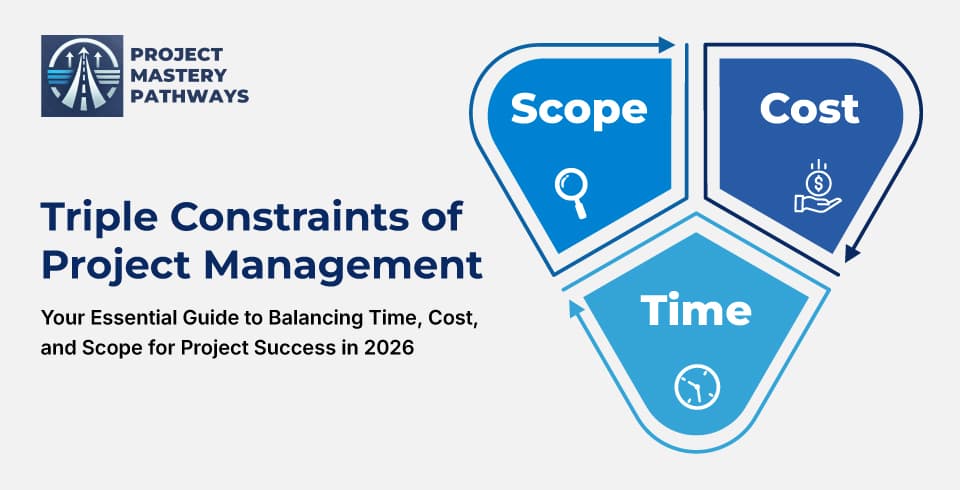
The triple constraints of project management—also known as the Iron Triangle or Project Management Triangle—represent three fundamental limitations that govern every single project: scope, time, and cost. These three factors are interconnected in such a way that changing one inevitably affects the other two. Think of it like a three-legged stool: if you shorten one leg, the entire stool becomes unstable unless you adjust the other legs accordingly.
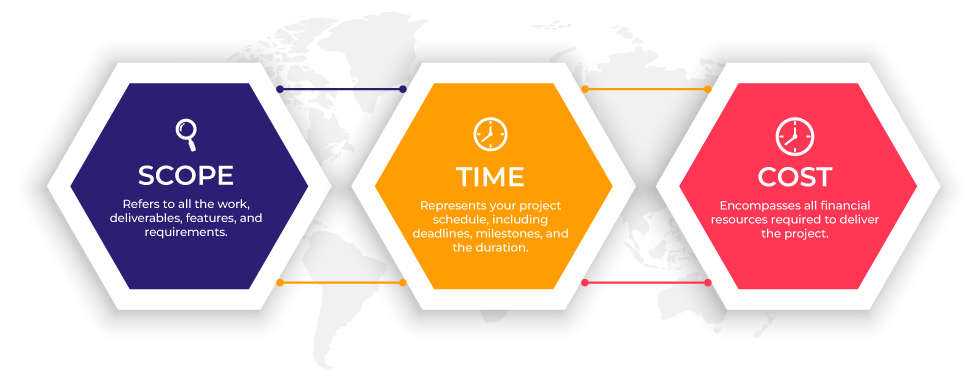
Scope refers to all the work, deliverables, features, and requirements needed to complete your project successfully. This includes everything stakeholders (people who have an interest or stake in the project’s outcome) expect as the final result. For example, if you’re developing a mobile app, the scope might include user login functionality, payment processing, and notification features.
Time represents your project schedule, including deadlines, milestones, and the duration required to complete all project activities. This constraint encompasses not just the final delivery date but also interim checkpoints and dependencies between tasks that determine when specific work can begin or must be completed.
Cost encompasses all financial resources required to deliver the project, including team salaries, equipment, software licenses, contractor fees, and any other expenses. The project budget defines the monetary boundaries within which you must operate.
The critical principle here is interdependence: you cannot adjust one constraint in isolation without impacting the others. This relationship is often summarized by the question: “Do you want it fast, cheap, or good? Pick two.” While this might sound pessimistic, it’s actually a powerful decision-making framework that helps you manage expectations and deliver successful projects within realistic boundaries.
Real-World Examples: How the Triple Constraints Work in Practice
Let’s examine how these constraints interact through practical scenarios you’ll likely encounter in your project management career.
Construction Project Example: Imagine a retail store construction project with a 6-month timeline and a $300,000 budget to build a 2,000 square foot space. Three months into the project, the client requests adding 500 additional square feet. Since the scope has increased by 25%, either the timeline must extend to allow for the additional work, or the budget must increase to hire more workers and purchase additional materials to maintain the original deadline. The project manager cannot simply accommodate this change without adjusting at least one of the other constraints.
IT Development Example: A sales team needs a new customer relationship management system built within 9 months for $250,000, with features including lead management, sales reporting, and contact tracking. Midway through development, leadership demands the system be ready in 6 months instead. To compress the timeline by one-third, the project manager faces tough choices: either increase the budget significantly to bring on additional developers who can work in parallel, or reduce the scope by launching with only the most critical features and adding others later as a “Phase 2” implementation.
Marketing Campaign Example: A marketing team prepares campaign materials for a product launch with a fixed launch date. When the client requests five additional promotional pages, the time constraint remains fixed (the launch date cannot move). The project manager must either increase the budget to hire additional designers who can work simultaneously, or negotiate reducing other deliverables from the original scope to free up resources for the new pages.
These examples illustrate why the triple constraints are sometimes called the Iron Triangle—the relationships between these variables are inflexible and cannot be bent without consequences. Understanding this principle is fundamental to effective project management and is extensively covered in professional certifications like the PMP Certification.
Strategies for Successfully Managing Triple Constraints in Your Projects
Mastering the triple constraints requires proactive management and clear communication from the very beginning of your project. Here are proven strategies that experienced project managers use:
Establish Priorities Early: Before your project begins, have explicit conversations with stakeholders about which constraint takes priority. Is the deadline absolutely fixed? Is there flexibility in the budget? Can scope be adjusted if necessary? Knowing which variables are negotiable versus non-negotiable guides all future decision-making. For instance, if you’re managing a regulatory compliance project where the government-mandated deadline cannot move, you’ve identified time as your fixed constraint—meaning cost and scope must be flexible.
Document Everything Formally: Create detailed project documentation that clearly outlines the agreed-upon scope, timeline, and budget. Have stakeholders formally approve these documents before work begins. This provides a baseline reference point when change requests inevitably arise, allowing you to demonstrate how proposed changes will impact other constraints.
Communicate Trade-offs Transparently: When stakeholders request changes, use the triple constraint framework to explain implications clearly. For example: “Adding this feature will require either three additional weeks or $25,000 more budget for contractors—which would you prefer?” This approach transforms potentially contentious conversations into collaborative problem-solving, as covered in our guide on Why Successful Project Managers Must Be People Managers First.
Monitor Continuously: Regularly track your progress against all three constraints using project management software or dashboards. Early detection of deviations allows you to course-correct before small issues become major problems. Weekly status reviews that assess time, cost, and scope simultaneously ensure you maintain balance across all three constraints.
Build Buffer Strategically: When planning, incorporate reasonable contingency into your estimates for time and cost. This buffer gives you flexibility to absorb minor changes without immediately affecting other constraints, though you should communicate clearly with stakeholders about realistic expectations rather than creating unrealistic “best case scenario” plans. For more insights on effective project planning, explore our comprehensive guide on How to Design Project Planning Templates.
Taking Your Project Management Skills to the Next Level
Understanding and effectively managing the triple constraints is essential for project management success, but it represents just the beginning of your journey toward becoming a highly skilled project manager. The iron triangle provides a framework for making informed decisions, managing stakeholder expectations, and delivering projects that meet organizational objectives within realistic parameters.
As you continue developing your project management expertise, remember that every experienced project manager once struggled with these same challenges. The difference between those who succeed and those who struggle often comes down to having the right knowledge, tools, and strategies to navigate the complex interplay between time, cost, and scope.
Ready to master these concepts and accelerate your project management career? Subscribe to PMPwithRay for weekly videos packed with practical tips, real-world examples, and expert insights that will transform how you manage projects. For comprehensive training that covers triple constraints and all other essential project management concepts, explore my courses on Udemy, where you’ll gain the foundational knowledge and advanced techniques that employers value most.